Bottom of Funnel Marketing: What It Is and How to Make More Money with It

Bottom of the funnel marketing is the moment of truth. Everything you've built at the top of the funnel, every email you've sent, every case study you've written, every trust-building piece of content that's been doing its job in the background, it all leads here.
The bottom of the funnel is where interested people become paying customers. Or don't.
Most marketers treat BOFU like it runs on autopilot. You did the awareness work, you did the nurturing, so now the sale just... happens. Except it doesn't. The bottom of the funnel has its own strategy, its own content, and its own ways to mess things up. Only 14% of marketers actively create BOFU content, despite its conversion rates being 25 times higher than top-funnel content [1]. That gap is either a problem or an opportunity, depending on which side of it you're on.
Here's how to be on the right side.
What Is Bottom of the Funnel?
Bottom of funnel (BOFU) is the decision stage of the marketing funnel. Leads here have already gone through awareness. They've done their research. They've compared options, read reviews, and narrowed it down. They know they have a problem. They know solutions exist. Now they're deciding who gets the business.
At the BOFU stage, your audience is asking things like:
"Why should I choose this over everything else I've looked at?"
"Can I actually trust this will work for my situation?"
"Is there a reason to act now instead of waiting?"
These are not curiosity questions. These are buying questions. The psychology here is fundamentally different from the rest of the funnel. Research shows 60% of buyers take six or more actions before purchasing [2], which means your BOFU content needs to be ready to meet them at every one of those final touchpoints.
The job is no longer to educate. It's to remove doubt, prove value, and make the decision feel obvious.
What BOFU Content Looks Like
BOFU content is the most specific, most persuasive, and most conversion-focused content you'll create. This is not the place for broad educational posts or general tips. Everything here should answer one question: why you, why now?
BOFU content types that convert:
Customer testimonials and reviews that speak directly to the outcome your prospect wants
Case studies with specific, measurable results (not "improved significantly" but "increased revenue by 43% in 90 days")
Free trials, demos, or consultations that reduce the risk of saying yes
Comparison pages that help them see why your offer wins
Limited-time offers or bonuses that give a legitimate reason to act now
FAQs and objection-handling content that clears the last roadblocks
Retargeting ads that bring back warm leads who visited but didn't convert
Notice what all of these have in common: they're built around proof, not promises. At the bottom of the funnel, claims don't close. Evidence does.
Why BOFU Is Where the Money Lives (and Where Most People Leave It)
The math at the bottom of the funnel is different from anywhere else. You're not trying to reach thousands of cold strangers. You're working with a much smaller audience that already knows you, already likes you, and is already considering you. That makes every conversion dollar work harder.
BOFU prospects convert 5 to 10 times more than top-funnel traffic [3]. Customer testimonials added at the BOFU stage increase conversions by 34% [4]. Retargeted ads, a core BOFU tactic, can boost conversion rates by 147% [5].
And yet most marketers underinvest here because BOFU success depends on having done the work upstream. If your top and middle of funnel are thin, the bottom dries up fast. Think of it as a reservoir. BOFU converts what's already in the pipeline. It can't create new prospects from nothing, it can only close the ones you've already earned.
Common BOFU Mistakes That Cost You the Sale
Pushing too hard too fast before trust is fully built (your TOF and MOFU work feeds this, not BOFU itself)
Weak or vague CTAs. "Learn more" is not a BOFU CTA. "Start your free trial" and "Get the proposal" are.
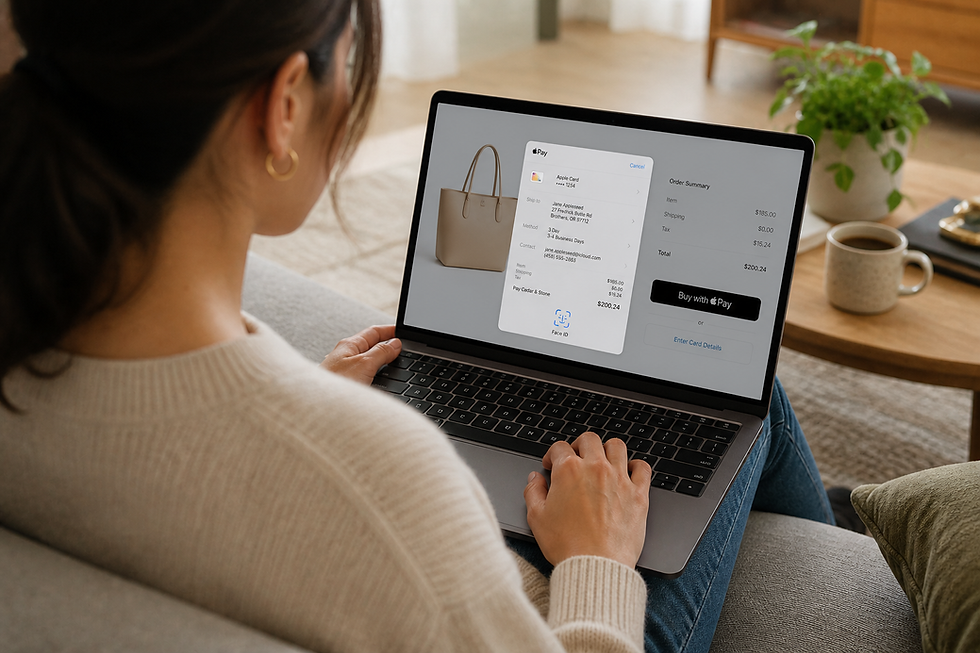
Friction in the buying process. A confusing checkout, a broken form, or six unnecessary steps between "yes" and "done" will lose sales that were already won.
No social proof. By the time someone is ready to buy, they want validation from other people who already did.
Ignoring objections. If you know the three reasons people don't buy, your BOFU content should address all three directly before the prospect even asks.
Nearly 48% of online shoppers abandon their carts because of unexpected costs at checkout [6]. That's not a traffic problem. That's a BOFU friction problem. The fix isn't more awareness content. It's removing the thing that's killing the conversion at the final step.
A Quick Example
Let's say you're a marketing strategist offering a 90-day consulting package.
Bad BOFU: Someone lands on your sales page after reading your content for months. The page lists your services. There are no testimonials, no case study, no clear next step, and the CTA says "Get in touch."
Better BOFU: The same person lands on your sales page and sees a quote from a client who had the exact problem they have. Below that is a short case study with a specific result.
Below that is an FAQ that addresses their likely objections. The CTA says "Book your free 30-minute strategy call" and it opens a calendar.
The second version does the work that the sales conversation used to have to do. That's what good BOFU looks like.
Frequently Asked Questions About Bottom of Funnel Marketing
These are the questions people search when they're trying to understand BOFU strategy, answered directly without making you scroll to find the point.
What is bottom of funnel marketing?
Bottom of funnel marketing is the strategy and content used to convert prospects who are ready to buy into paying customers. It focuses on removing final objections, building last-mile trust, and making the decision to purchase feel easy and obvious. BOFU sits at the end of the buyer's journey, after awareness (TOFU) and consideration (MOFU).
What does BOFU stand for?
BOFU stands for bottom of funnel. It's used interchangeably with lower funnel marketing, the conversion stage, and the decision stage. All of these refer to the final phase of the buyer's journey where purchase decisions get made.
What kind of content works best at the bottom of the funnel?
Testimonials, case studies, free trials, demos, comparison pages, objection-handling FAQs, and retargeting ads perform best at the BOFU stage. These formats work because they address the specific concerns of someone who is actively deciding, not just browsing. The common thread is proof: real results, real people, real reasons to act.
What is lower funnel marketing?
Lower funnel marketing is another term for bottom of funnel or BOFU marketing. It refers to any strategy or content designed to convert warm, high-intent leads into customers. Lower funnel tactics are the most direct and conversion-focused of any funnel stage, because the audience is already primed and the goal is to close.
How is BOFU different from TOFU and MOFU?
TOFU (top of funnel) focuses on awareness, reaching people who don't know you yet with broad, helpful content. MOFU (middle of funnel) focuses on consideration, nurturing leads who know you but aren't ready to buy with trust-building content. BOFU (bottom of funnel) focuses on conversion, closing the deal with proof-driven, action-oriented content. Each stage requires completely different messaging, content formats, and success metrics.
What metrics should you track at the bottom of the funnel?
Bottom of funnel metrics include conversion rate, cost per acquisition (CPA), return on ad spend (ROAS), average deal size, and sales cycle length. These measure whether your BOFU content is actually closing. This is the one stage of the funnel where revenue is an appropriate and direct metric, because conversion is the entire job at this stage.
How do you know if your bottom of funnel is working?
Your BOFU is working when qualified leads are converting at a healthy rate, your cost per acquisition is sustainable, and your sales conversations are shorter because prospects arrive pre-sold. If you're getting plenty of leads but few conversions, the problem is almost always in the BOFU, whether that's weak social proof, a friction-heavy buying process, or content that stops short of making the case.
Can BOFU work without strong TOFU and MOFU?
Not sustainably. BOFU converts the leads already in your pipeline, but it can't generate new ones. Without a healthy top and middle of funnel feeding warm prospects into the decision stage, even the best BOFU content will eventually run dry. A full-funnel strategy is the only approach that compounds over time. BOFU gets the credit for the sale, but TOFU and MOFU are what made the sale possible.
If you want to see how the full system fits together from the first touchpoint to the final conversion, start here: Marketing funnels explained
Sources
[1] GrowandConvert via Arfadia — Only 14% of marketers create BOFU content; BOFU has 25x higher conversion rates than top-funnel content. arfadia.com/glossary/EN/bottom-of-the-funnel-bofu
[2] Tenet — 60% of buyers take six or more actions before purchasing. yourtenet.com/resources/bottom-of-funnel
[3] Arfadia — BOFU prospects convert 5-10x more than top-funnel traffic. arfadia.com/glossary/EN/bottom-of-the-funnel-bofu
[4] Amra and Elma — Customer testimonials at BOFU increase conversions by 34%. amraandelma.com/marketing-funnel-conversion-statistics
[5] Amra and Elma — Retargeted ads boost conversion rates by 147%. amraandelma.com/marketing-funnel-conversion-statistics
[6] Amra and Elma — 48% of shoppers abandon carts due to unexpected costs at checkout. amraandelma.com/marketing-funnel-conversion-statistics


Comments